If you look up ‘best AI SEO tools 2027’ – you’ll see every other SEO tool today claims to be ‘AI-powered.’ Most of them have no real AI-powered functionality. Their websites or dashboards simply have basic chatbots bolted on. So, the real question you need to ask is: what can an AI-powered SEO tool do for your business that a regular SEO tool can’t?
What Can AI SEO Tools for Small Business Do?
Can ‘AI-powered’ SEO tools perform better keyword research? Help you build a cleaner site structure? Or help you create truly original, non-plagiarised content?
After all – these are the fundamental aspects of SEO you still need to perform if you want your site to rank high both on Google’s search results and on most AI engines.
Google confirmed this earlier this year. According to them, to get Answer Engine Optimisation (AEO) and Generative Engine Optimisation (GEO) right, sites still need to focus on core SEO.
Thankfully, the best SEO tools for creators in 2027 do have AI-powered features that can help you perform all of these essential tasks (and more) in far more cost- and time-effective ways.
Let’s go through 5 of these awfully-helpful AI SEO tools for small businesses.
5 Best AI SEO Tools 2027: What They Actually Help With
These 5 tools serve different purposes, and their AI features solve different problems:
1. Semrush: Best All-in-One AI Visibility and SEO Suite
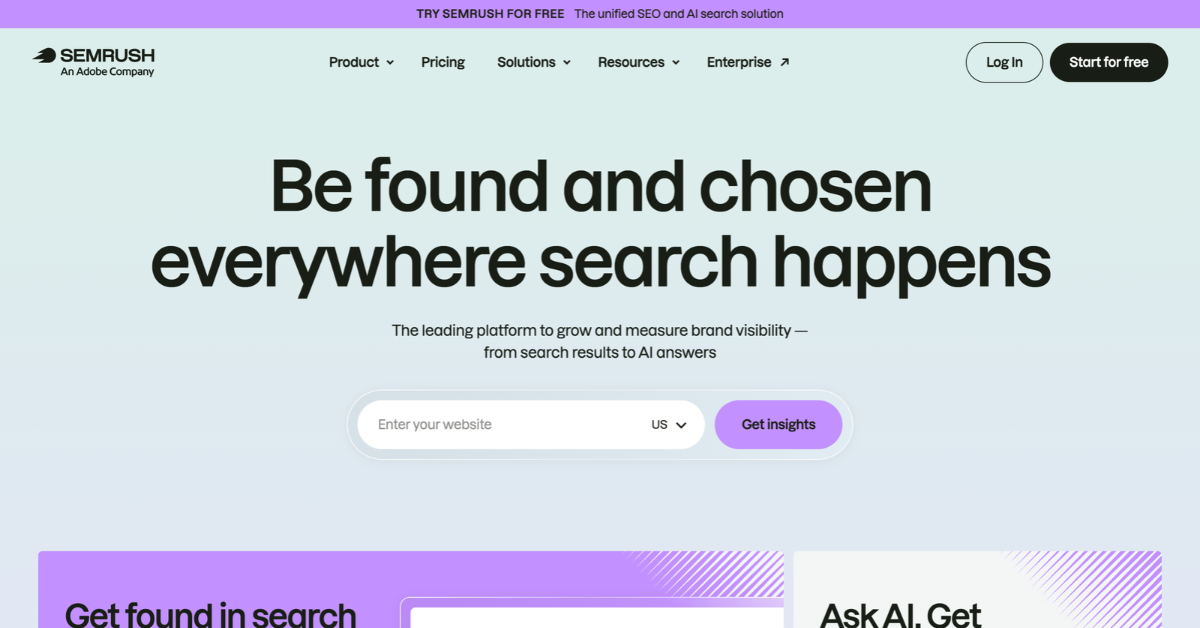
Semrush remains the most complete all-in-one workspace for SEO professionals to perform:
- Keyword research
- Competitor gap analysis
- Technical site audits
Semrush’s Prompt Research and Position Tracking tools scan:
- ChatGPT
- Gemini
- Perplexity
- Google AI Overviews
Then, it shows:
- How often your brand appears inside AI-generated answers
- Which competitors are appearing instead — for certain AI queries
- Which questions you should build content around to appear in more AI summaries
These are the reasons why Semrush continues to be one of the best SEO tools for creators in 2027, which lets them:
- Manage AEO and SEO in one dashboard
- Spot exact content gaps where competitors are winning AI citations
- Fix technical crawl errors
2.Ahrefs: Best for Competitor Research and AI Brand Tracking
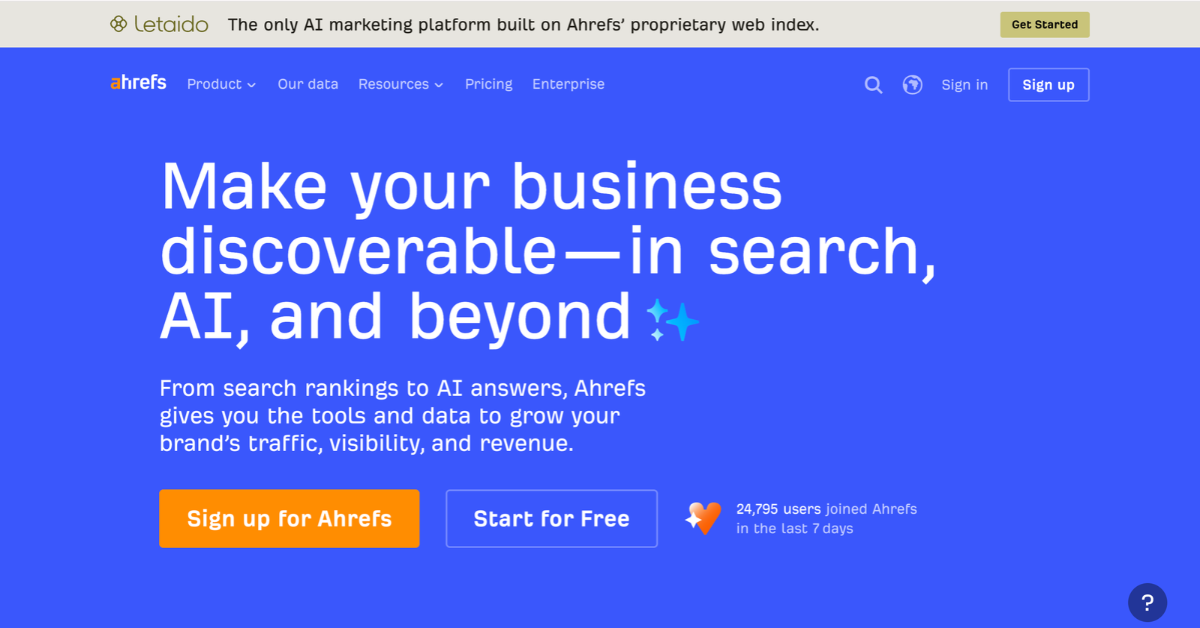
Ahrefs has been running one of the world’s largest web crawlers for years.
That’s why it’s still the gold standard for tracking which webpages and types of content send traffic/links to your competitors.
Now, Ahrefs also uses AI to cluster search terms by:
- Topic popularity
- Buyer intent
With this AI-powered feature, users can easily uncover low-difficulty topics that bigger sites have ignored. Its new Brand Radar module also tracks a database of 414+ million real search prompts on:
- Google AI Overviews
- ChatGPT
- Perplexity
- Gemini
- Copilot
It can show you what types of 3rd-party blogs in your niche AI engines trust most. You can use that data to create similar content and get your website featured in AI answers more frequently.
All the leading AI-driven marketing agencies use these new features from Ahrefs.
3. SE Ranking: One of the Best-Value AI SEO Tools for Small Business
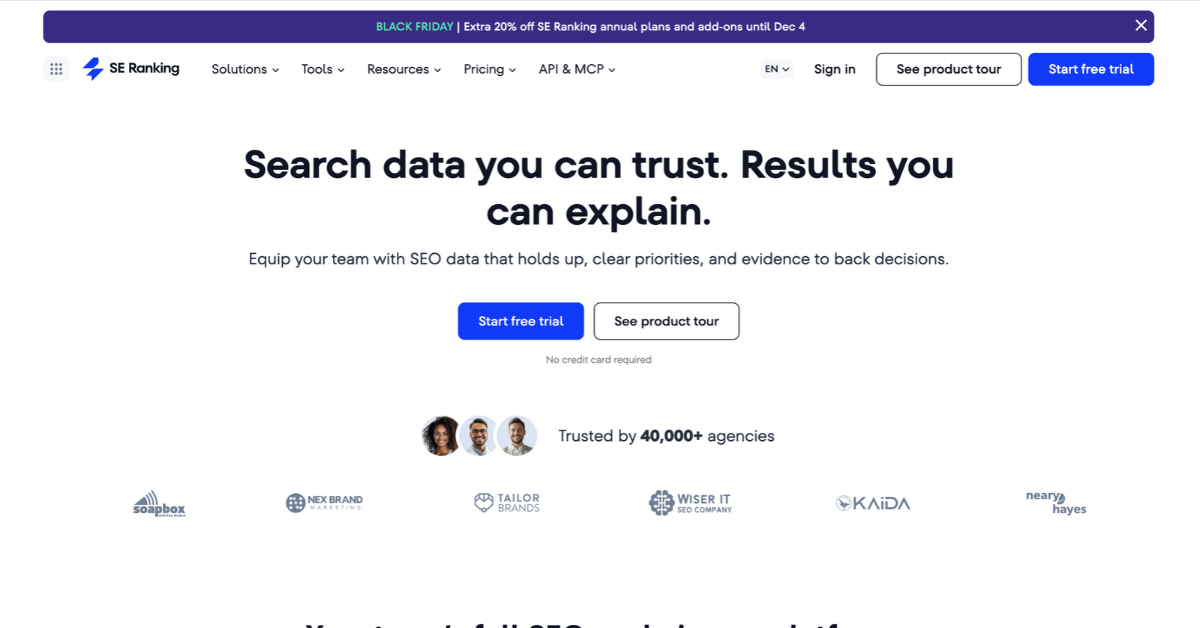
On the SE Ranking dashboard, you can swiftly perform:
- Daily site rank tracking
- Website health audits
- Competitor research
- Local map monitoring
It also has a built-in AI Search tracker tool that monitors whether your pages are cited in AI Overviews and major chatbots.
Its AI Results Tracker can also highlight which of your target keywords are losing clicks to zero-click AI summaries so you can adjust your content strategy.
That’ll lead to more website visits and thus more advertising opportunities.
4.Surfer SEO: Best for Upgrading and Ranking Content
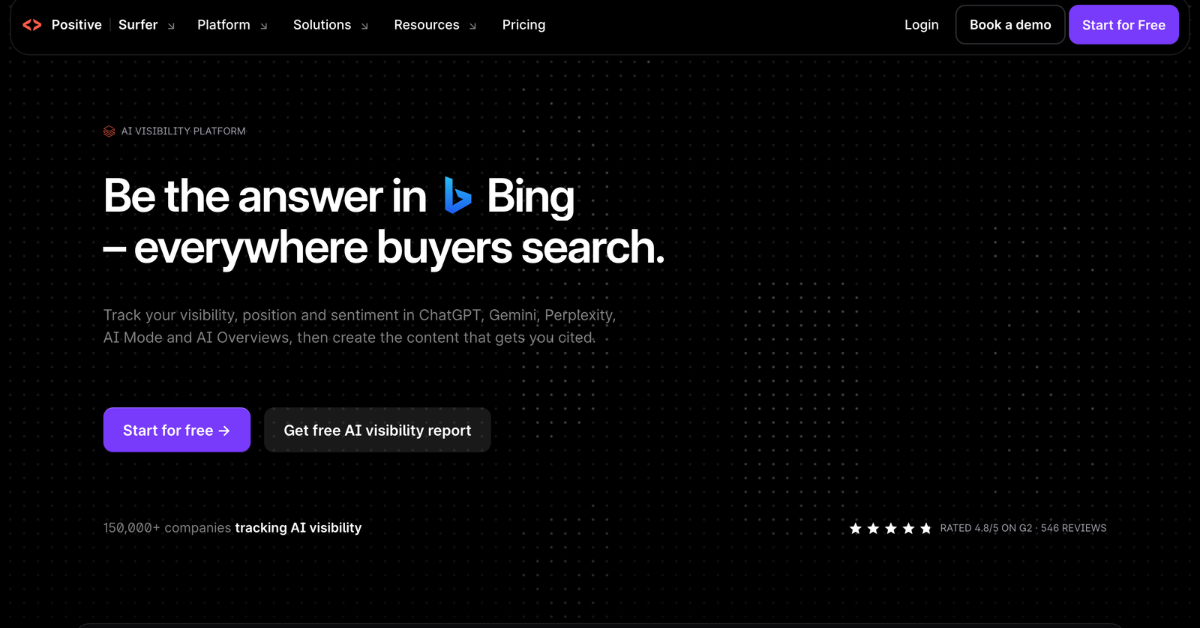
If your articles are stuck on page 2 of Google? Surfer can show you why.
Surfer’s Content Editor analyses the top-ranking pages for your target keyword and uses natural language processing to give your content drafts live 0-100 scores based on:
- Topic coverage
- Heading structure
- Entities covered
Its Auto-Optimize feature will then weave missing subtopics into those drafts automatically.
Bloggers don’t have to guess how long an article should be or which subheadings to include anymore. Surfer can give them checklists on how to SEO and AEO-optimize their content.
5. Frase: Best for Fast Content Briefs
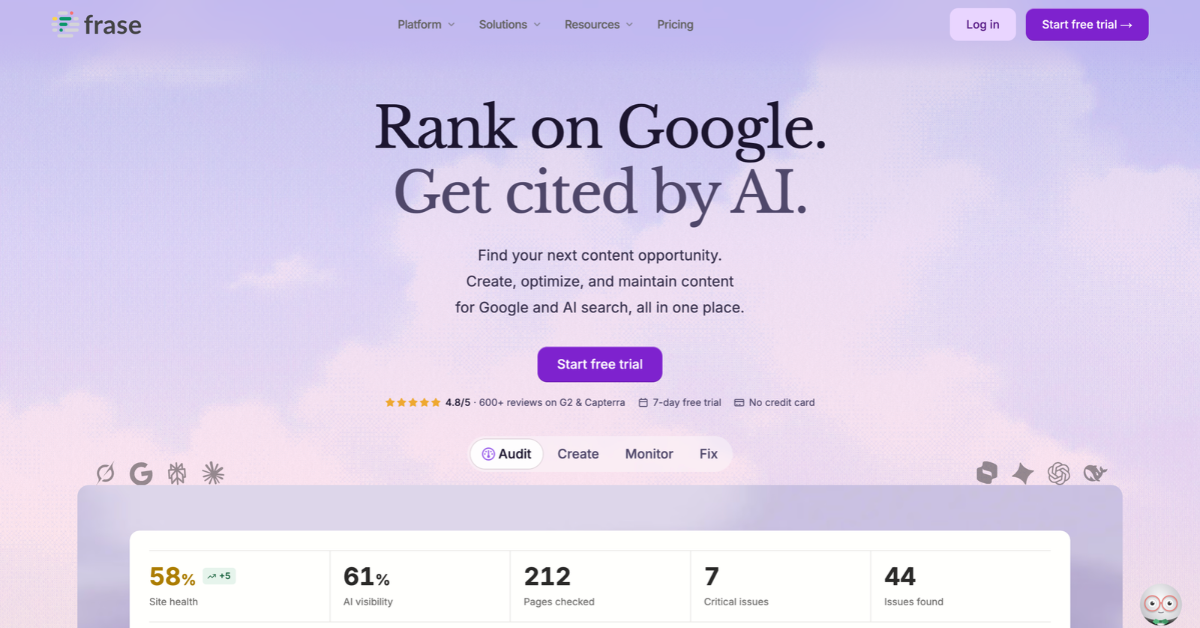
Do you post a ton of answer-focused articles – but don’t know what topics will earn you AEO and GEO points? Frase can solve that. Feed it a topic/keyword and, in seconds, it’ll pull:
- The top search results related to that topic
- The ‘People Also Ask’ questions
- Reddit threads
You get a complete, SEO-optimized content brief in seconds. Frase can also grade your content with both SEO and GEO scores. You get to cut hours of research to minutes!
Conclusion
Which of these 5 best AI SEO tools of 2027 do you plan to use? They all solve different problems, so you should try the free or lowest-cost tiers of all five of these tools.
Then, pay for any one tool that you feel is helping elevate your site’s AEO and SEO the most.
FAQs
Q1- Why does one SEO tool show a different keyword search-volume estimate than another?
Every platform uses different data sources. Treat these data points as relative compasses.
Q2- Can using AI SEO tools guarantee top SEO/AEO rankings?
Only if you use their insights to consistently publish top-tier content!
Q3- Does Google penalise all AI-generated content?
Google only penalises AI content that’s:
- Unedited
- Low-value
- Keyword-stuffed
Q4- Do I need a separate paid tool to track AI Overviews?
Google Search Console’s Generative AI report tool is free.
Q5- I have a new website. Should I invest in paid SEO software?
Try the free tiers of these tools before paying!